What is developing across parts of the United States should not be dismissed as a simple juvenile disorder or merely as large youth gatherings.
Law enforcement agencies, municipalities, shopping districts, entertainment venues, and private security teams are increasingly facing rapidly mobilized crowd events commonly known as “Teen Takeovers.” The term itself understates the operational realities emerging around these incidents.
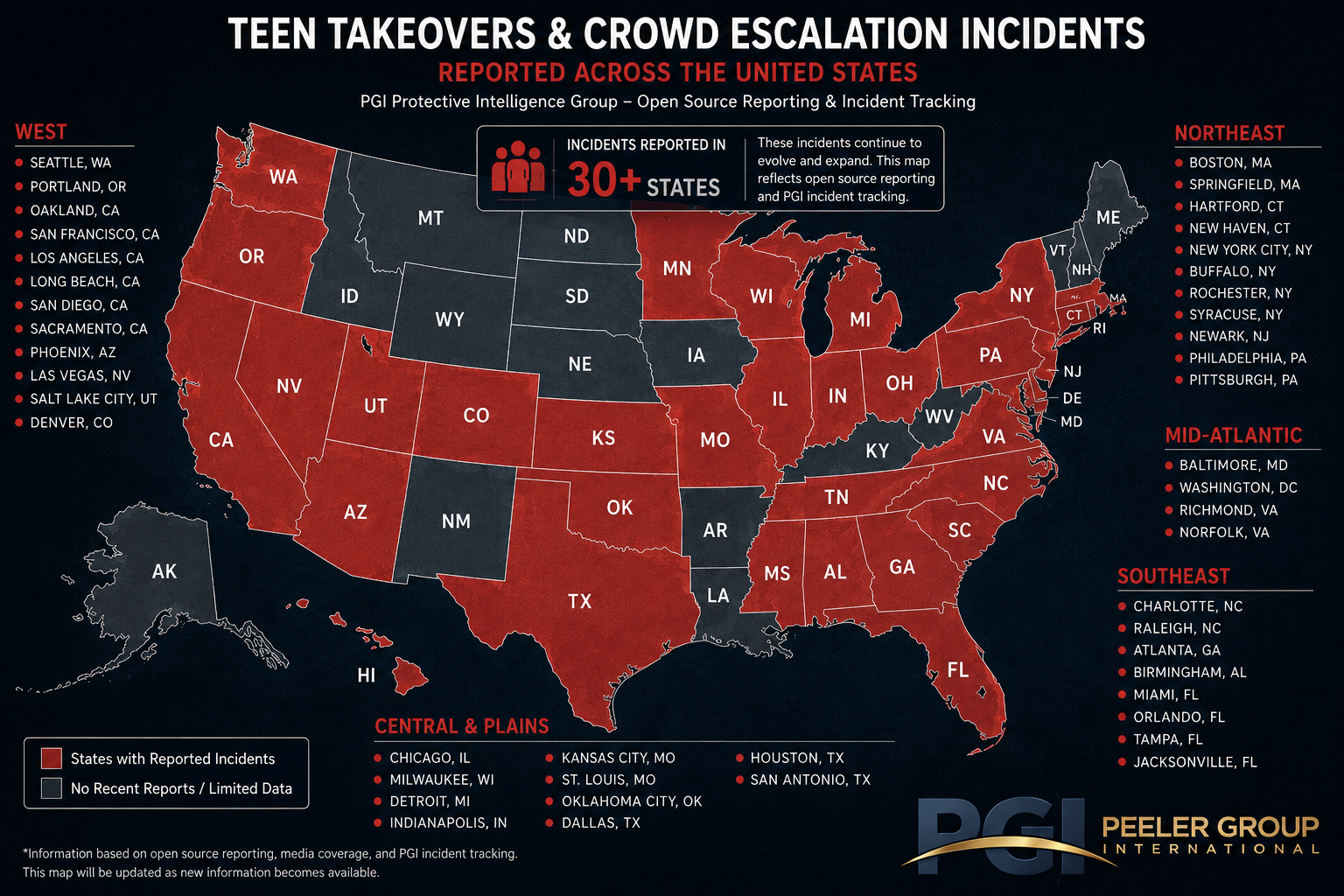
Agencies that continue to view these incidents solely as juvenile misconduct events risk underestimating the crowd and behavioral dynamics developing around them. What we are seeing is an evolving challenge shaped by social media amplification, emotional contagion, decentralized organization, weakening environmental control, and rapidly shifting crowd behavior.
The concern is not simply that large groups of teenagers are gathering. Large gatherings occur daily across the country without violence or instability. The concern arises when crowds form without structure or supervision, accountability weakens, and emotional momentum overcomes individual judgment. In those environments, behavior is no longer shaped primarily by personal decision-making. Individuals become increasingly influenced by the crowd, while online reinforcement continues to accelerate reactions, visibility, and escalation in real time.
Once those elements begin to combine, individual behavior within the crowd often shifts. People who would normally exercise restraint, avoid confrontation, or make better decisions may begin to react differently as group influence, emotional momentum, and reduced accountability start shaping behavior around them.
THE EVOLVING OPERATIONAL ENVIRONMENT
Modern takeover-style gatherings are different from what we have traditionally observed. In many cases, there is no formal organizer, and social popularity itself drives participation. Crowds can form within hours through reposts, livestreams, viral flyers, group chats, and rapid peer amplification across platforms such as TikTok, Snapchat, Instagram, and Discord.
In our experience, the physical gathering is often only one component of the event because the gathering itself extends digitally before, during, and long after the crowd disperses. Many participants are not simply attending the event. They are recording it, livestreaming it, reacting to it online, and, in many cases, performing for an audience at the same time.
Behavioral researchers and sociologists have long recognized that people often alter their behavior when performing for an audience, and social media has significantly amplified that dynamic. Years ago, individuals engaging in disruptive public behavior often tried to avoid visibility or identification. In the current environment, visibility itself may become part of the reward structure. Viral recognition, follower growth, livestream interaction, online notoriety, and peer approval can reinforce behavior in real time. The more attention certain actions receive online, the more socially valuable they may become within portions of the crowd. What this has created is a very different public-order environment than many agencies faced even a decade ago.
WHY THESE EVENTS CONTINUE TO GROW
Operationally, we continue to see that many individuals attending these events do not initially arrive with criminal intent. Some attend to socialize, seek excitement, follow peer influence, gain visibility online, or simply view the gathering as entertainment without fully understanding how quickly the situation can become unstable.
At the same time, those same crowds may attract individuals who arrive anticipating confrontation, carrying weapons, seeking retaliation, looking for robbery opportunities, attempting to provoke law enforcement, or hoping to capture viral conflict footage. Large gatherings create confusion, reduce accountability, and fragment security awareness, creating opportunities for criminal behavior to emerge alongside what may have originally started as a social event. The danger increases rapidly when those motivations merge in a dense crowd where accountability is already weakening.
CROWD PSYCHOLOGY AND BEHAVIORAL SHIFT
In our experience, crowd psychology is still widely underestimated during these events. Individuals who would never independently assault someone, damage property, attack law enforcement, participate in mob behavior, or engage in public disorder may still become involved once they psychologically merge with the crowd.
Behavioral researchers have long documented that personal restraint and accountability weaken in emotionally charged group settings, particularly when anonymity increases and responsibility becomes diffused across the crowd. As that shift begins, individuals often stop viewing themselves as solely responsible for their actions and instead begin reacting to the emotional momentum developing around them.
Excitement spreads quickly through crowds.
Confrontation spreads quickly.
Panic spreads quickly.
Aggression spreads quickly.
Defiance spreads quickly.
Once emotional synchronization begins to develop within the crowd, enforcement becomes significantly more difficult, and escalation occurs rapidly.
WEAPONS AND ESCALATION
One of the most concerning developments we are seeing nationally is the repeated recovery of firearms and weapons at these gatherings. The presence of weapons fundamentally alters the threat environment.
Large crowds create ideal conditions for armed individuals because concealment improves as density increases, visual detection becomes more difficult, movement becomes chaotic, security attention fragments, and officers lose visibility across the environment. Accountability also weakens as individuals blend into the crowd.
The challenges surrounding these events stem from the fact that not everyone arrives with the same mindset or purpose. Some individuals attend socially, while others may arrive already anticipating confrontation or prepared for violence. Once weapons enter an unstable crowd environment, even a minor confrontation can escalate into deadly violence within seconds.
NORMALIZATION OF WEAPON PRESENCE
We are also seeing a growing normalization of weapon possession in some peer environments. Carrying a weapon may no longer be viewed solely as hidden criminal behavior but instead as part of identity, intimidation, perceived protection, reputation building, or social status within certain groups.
As those attitudes become reinforced socially and online, the presence of weapons can start to feel more acceptable or expected at these gatherings. When that mindset merges with crowds where accountability is already weakening, the potential for impulsive violence increases significantly.
BEHAVIORAL INDICATORS AND INTELLIGENCE COLLECTION
The behavioral indicators surrounding these events are often visible long before crowds physically gather.
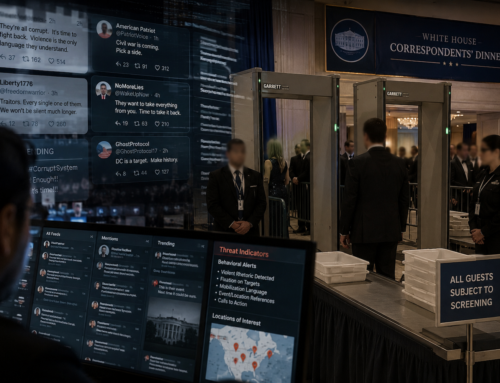
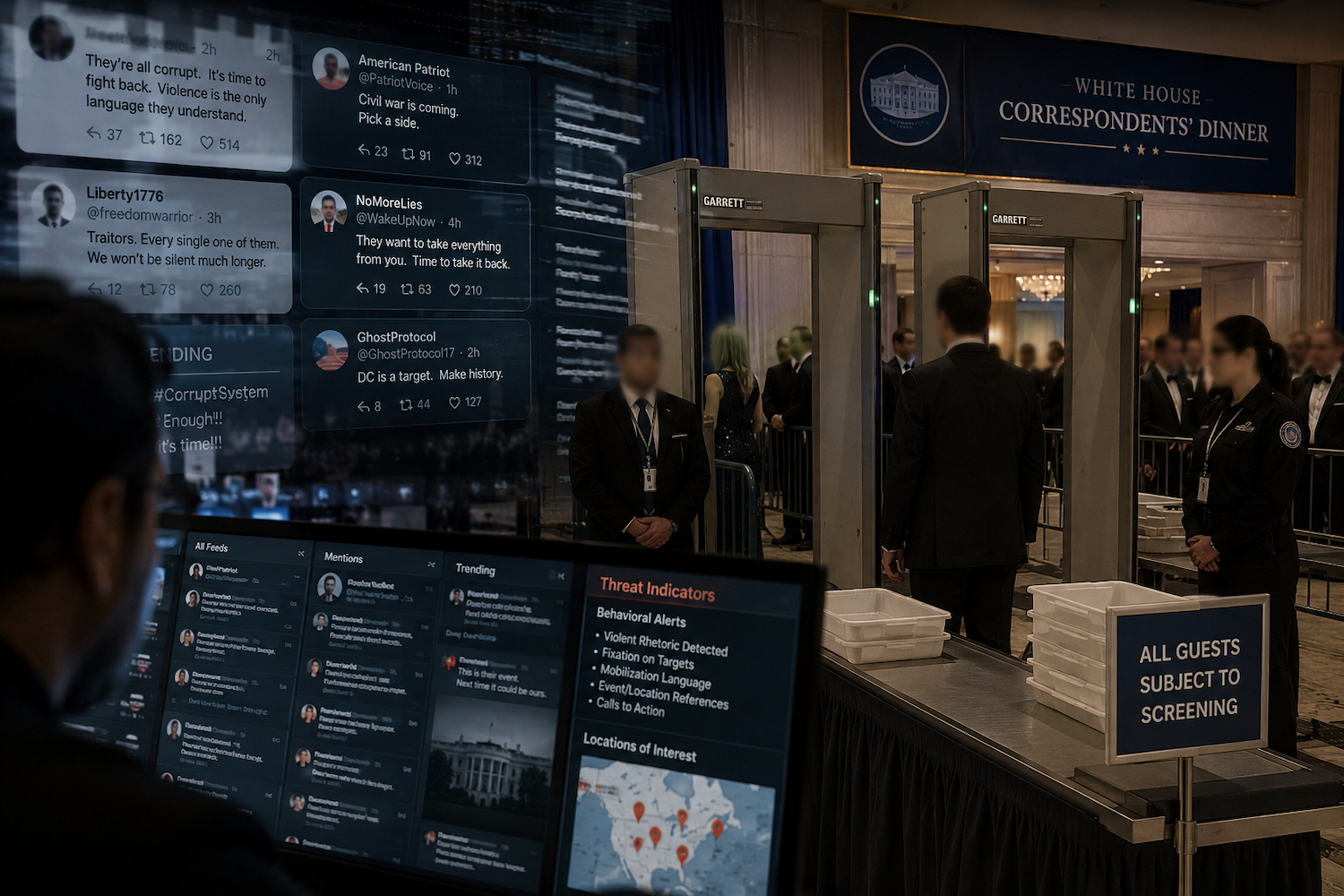
Online activity may include rapidly spreading meetup posts, takeover terminology, countdown-style promotions, references to specific locations that are overwhelmed, anti-authority language, videos celebrating prior incidents, and repeated mentions of malls, parks, entertainment districts, or other public gathering areas.
Analysts may also observe:
- “everybody show up” messaging
- vehicle caravan coordination
- references to retaliation
- references to fights
- references to weapons
However, effective intelligence gathering requires far more than monitoring isolated keywords or hashtags. We need to watch for behavioral patterns themselves. From an operational perspective, the emotional momentum developing around the event, how rapidly participation is spreading, how individuals are interacting online, and whether conversations are shifting from social gathering toward confrontation, disruption, intimidation, or instability.
SWARM MOBILIZATION AND COALITION SIGNALING
What we are increasingly seeing is crowd mobilization behaving less like organized event planning and more like swarm activity, amplified in real time through social media.
Many of these gatherings are decentralized, with no formal hierarchy or clearly identifiable organizer directing the crowd. Instead, momentum builds through emotional amplification, peer reinforcement, and coalition signaling as individuals align socially with the event, the crowd, or the identity associated with participation.
A large portion of participants may not be primary aggressors or arrive intending violence, but their participation still reinforces the environment that fuels escalation. Every repost, livestream, attendance video, and viral confrontation clip contributes to the normalization cycle that continues to fuel these events online and in public spaces.
We need to understand those behavioral and digital patterns, which is why intelligence operations have become increasingly important in identifying escalation trends before crowds physically form.
Prevention efforts increasingly require:
- real-time open-source intelligence monitoring
- behavioral analysis
- crowd movement prediction
- social media monitoring
- regional intelligence sharing
- geospatial trend analysis
- rapid communication coordination
Analysts should focus less on isolated words and more on behavioral momentum. The language we commonly see surrounding these events often reflects emotional mobilization:
- “pull up”
- “flood the location”
- “they can’t stop us”
- “outside tonight”
- “run it back”
- “take over”
These patterns reflect attempts to overwhelm environmental control through mass participation, heightened emotion, and rapid crowd growth.
EARLY INTERVENTION AND ENVIRONMENTAL CONTROL
One of the most persistent operational failures we continue to observe is delayed intervention in the early stages of crowd formation.
Small gatherings can quickly become psychologically anchored once participants sense hesitation, weakened accountability, lack of structure, or a growing crowd’s control over the environment. As those perceptions spread through the group, the gathering often begins to reinforce its own momentum, both behaviorally and emotionally.
Early intervention remains one of the most effective prevention tools available to law enforcement and security personnel because preventing a crowd from psychologically consolidating is far easier than regaining control once emotional momentum has already taken hold.
We recommend that law enforcement, security personnel, and venue operators avoid allowing these gatherings to stabilize in the early stages. Once crowds believe they can remain unchecked, momentum and reinforcement often accelerate quickly.
Early intervention is not about overreaction or unnecessarily aggressive enforcement. It is about maintaining environmental control, reinforcing accountability, disrupting crowd consolidation, and preventing the perception that rules and structure are collapsing. Visible, calm, and consistent enforcement actions during the early stages of crowd formation are often far more effective than large-scale crowd dispersal attempted after momentum has already taken hold.
RECOMMENDED EARLY ACTIONS
Early visible intervention may include:
- loitering enforcement
- traffic disruption
- parking management
- trespass enforcement
- visible patrol presence
- environmental control
- immediate engagement with emerging agitators
- maintaining movement rather than allowing a stationary crowd buildup
ADULT INVOLVEMENT AND OPERATIONAL SHIELDING
In some incidents nationwide, law enforcement has encountered extremely young participants mixed in with older juveniles and adults in the same unstable environments. Reported arrests connected to a recent Tampa gathering included individuals ranging from 12 to 21 years old. Operationally, that age range is significant because it reflects how quickly these environments blend adolescent impulsivity, peer reinforcement, adult influence, and criminal opportunity into the same crowd dynamic.
This further underscores that these incidents cannot be viewed simply as isolated instances of juvenile misconduct. Once younger adolescents enter emotionally charged crowd environments alongside older participants, with weapons, confrontation, and online reinforcement structures, the potential for escalation increases rapidly.
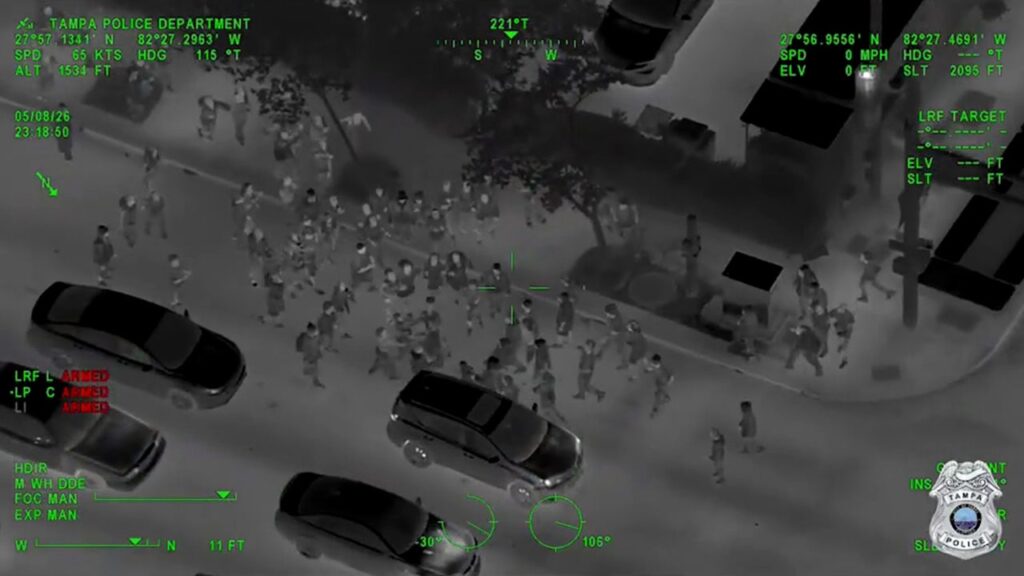
Tampa, FL - May 8, 2026
Source: Tampa Police Department
This is an area we believe deserves far more attention: adult involvement in these gatherings. While much of the public discussion focuses on juveniles, adults are increasingly present at these events in ways that directly contribute to instability and escalation. Some adults actively:
- promote gatherings
- provide transportation
- exploit crowds for criminal opportunity
- supply weapons
- encourage anti-authority behavior
- participate directly in disorder
Others recognize that large juvenile crowds complicate law enforcement response and reduce the likelihood of immediate aggressive enforcement action. In some environments, those crowds are used as operational cover for theft, intimidation, confrontation, retaliation, or other criminal activity.
THE NORMALIZATION PROBLEM
In our view, the long-term concern is normalization, which gradually lowers behavioral thresholds, particularly among younger individuals heavily influenced by peer reinforcement and online visibility.
Repeated exposure to:
- viral crowd disorder
- anti-authority behavior
- weapons presence
- intimidation
- public confrontation
- mob behavior
- performative aggression
The more these incidents become normalized socially and amplified digitally, the greater the likelihood that future gatherings escalate more quickly, grow larger, and involve more serious violence.
What is emerging is not driven by a single factor. It is a convergence of:
- crowd psychology
- behavioral septicity
- digital mobilization
- identity signaling
- environmental instability
- emotional amplification
- weakened accountability structures
- performative aggression culture
Understanding those combined factors is critical for prevention, intelligence gathering, operational planning, and early intervention.
MOVING BEYOND REACTIVE ENFORCEMENT
In our view, the most effective agencies moving forward will be those that move beyond purely reactive enforcement models and begin incorporating behavioral understanding, intelligence gathering, environmental control, rapid intervention, coordinated operational planning, social media monitoring, and crowd psychology awareness into their public-order and violence-prevention strategies.
These incidents are developing too quickly and evolving too rapidly to rely solely on traditional response models after crowds have already stabilized emotionally and physically.
One of the greatest operational mistakes agencies can make is underestimating how quickly digitally amplified gatherings can shift from what initially appears to be a social event into an unstable crowd environment with the potential for rapid escalation.
COMMUNITY ENGAGEMENT, PARENTAL AWARENESS, AND PREVENTION
Law enforcement and security efforts alone will not fully address these incidents if communities continue responding only after crowds have already formed. In our experience, prevention is significantly more effective when municipalities, schools, parents, youth organizations, venue operators, community leaders, and law enforcement begin working together before these gatherings occur.
Many parents do not fully understand how quickly these events are organized, how social media amplification drives participation, or how rapidly crowd behavior shifts once emotional momentum builds. Others may not recognize the behaviors that precede participation, especially when online activity, manipulation, peer reinforcement, and digital visibility influence decision-making long before a crowd physically forms.
We strongly encourage communities to begin proactive engagement efforts that bring together:
- law enforcement
- school administrators
- parents and guardians
- youth organizations
- security professionals
- municipal leadership
- community stakeholders
Town hall meetings, school-based discussions, behavioral awareness briefings, and coordinated community outreach efforts create opportunities to educate families and community members about:
- behavioral indicators
- crowd psychology
- online mobilization trends
- social media amplification
- weapons normalization
- escalation warning signs
- accountability expectations
- early reporting concerns
Many of these gatherings gain momentum because communities often see only isolated pieces of the problem rather than the larger behavioral pattern emerging around them. Parents may notice social activity. Schools may observe behavioral changes. Law enforcement may see online escalation. Security teams may notice gathering patterns. Bringing those observations together early helps communities identify trends before they escalate into unstable crowd environments.
We also believe communities need to move beyond viewing these incidents solely as enforcement problems. These situations involve behavior, peer reinforcement, online influence, emotional contagion, and rapidly shifting crowd dynamics. A coordinated prevention strategy centered on awareness, communication, intelligence sharing, early intervention, and shared responsibility significantly improves a community’s ability to disrupt these gatherings before they escalate into larger public safety incidents.