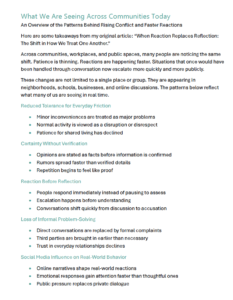
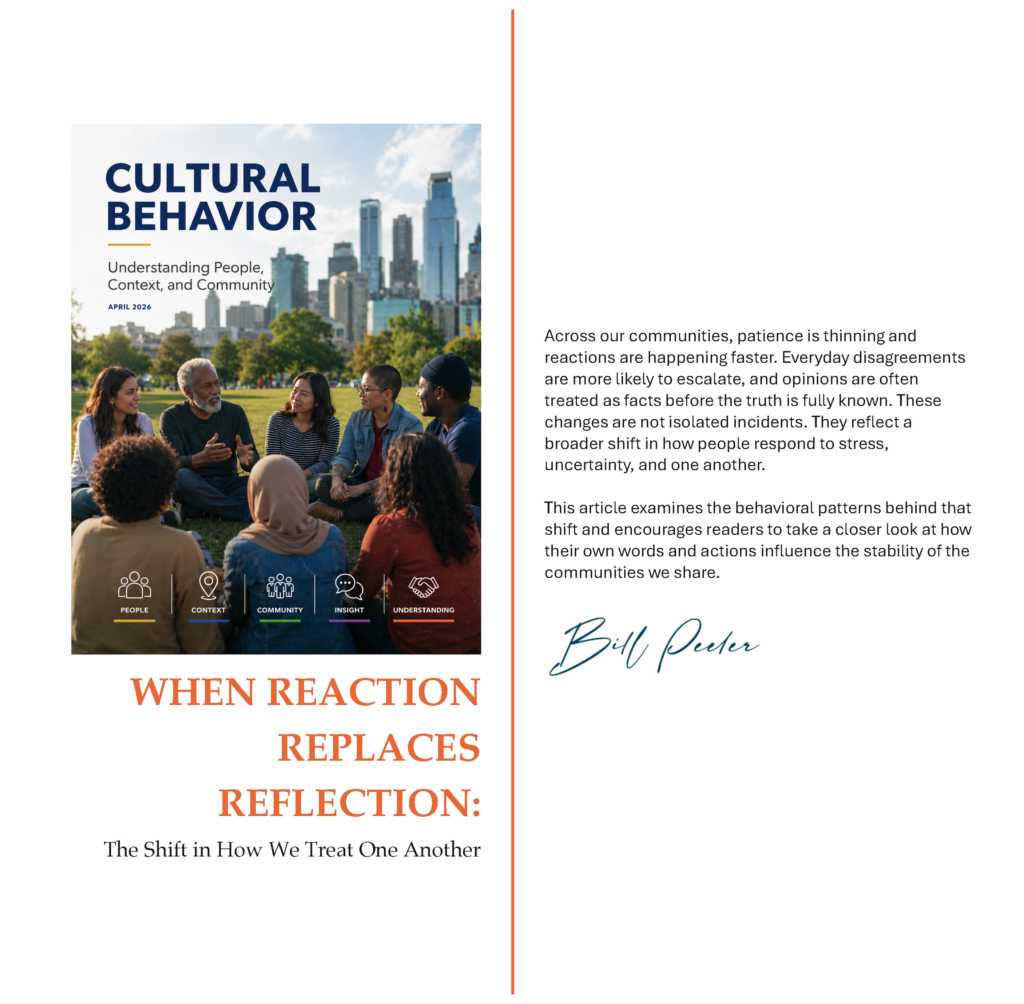
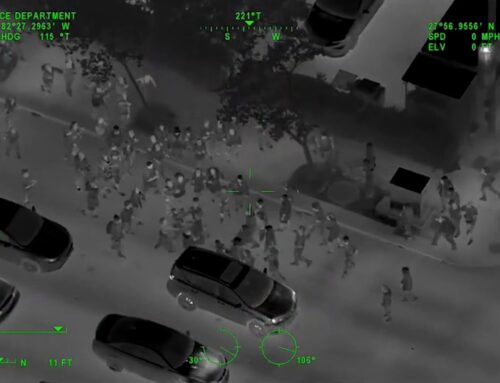
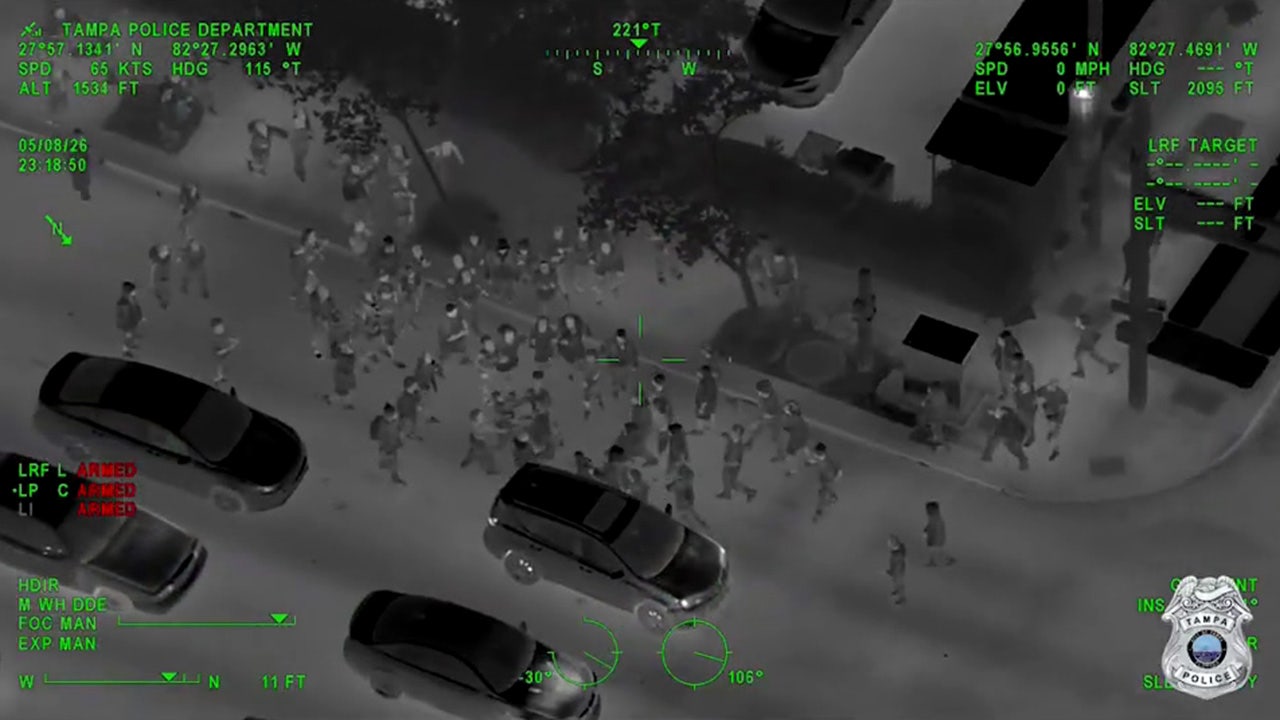
Across our communities, patience is thinning, and reactions are happening more quickly. Everyday disagreements are more likely to escalate, and opinions are often treated as facts before the truth is known. These changes are not isolated incidents. They reflect a broader shift in how people respond to stress, uncertainty, conflict, and each other.
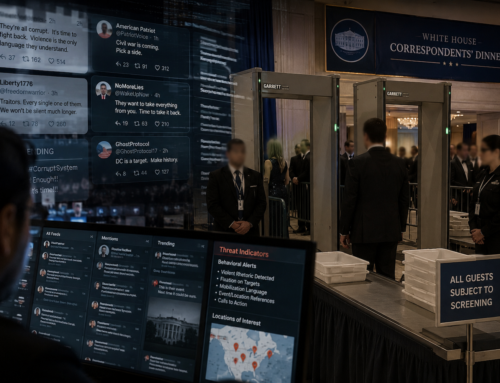
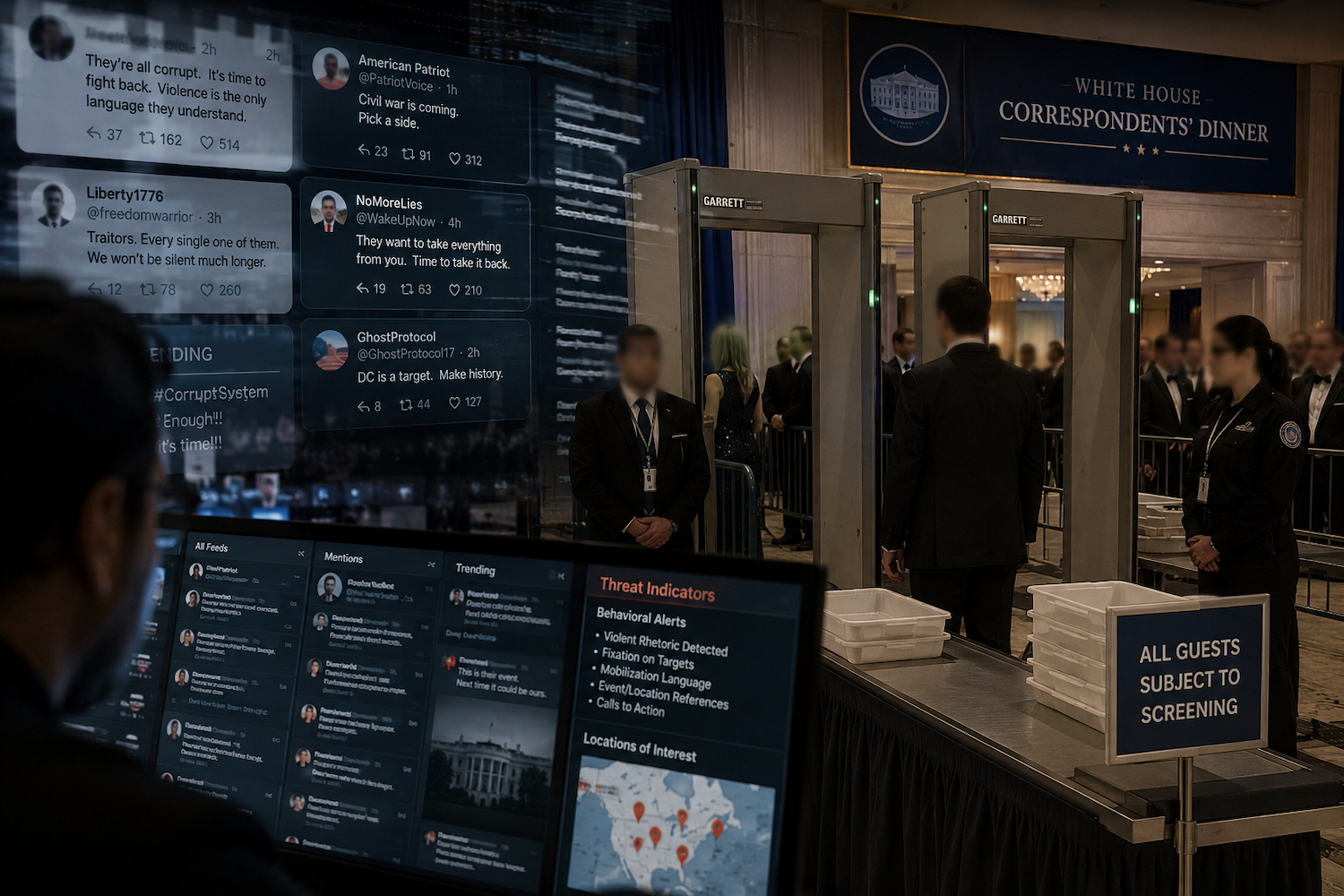
This article examines the behavioral patterns behind that shift. It explores how online behavior can spill into real-world settings, how certainty can form before facts are known, and how small reactions can put pressure on families, workplaces, public venues, neighborhoods, and communities. The purpose of this article is not to assign blame but to encourage reflection. If we want stronger and safer communities, we have to be willing to look at our own role in the conversations and conflicts around us. Our words matter. Our reactions matter. The way we respond when information is incomplete can either calm a situation or make it worse.
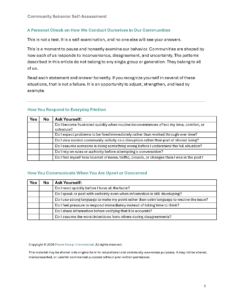
This page includes the full article in PDF format, along with a self-evaluation form intended to help readers consider how they respond to stress, disagreement, and uncertainty. Additional breakdowns of the article will be added later to address specific topics in more detail.