Why Corporate Security Must Evolve to Prevent Harm
Corporate security teams collect more information today than ever before. Dashboards are full. Alerts are constant. Reports are generated daily.
Yet executive risk continues to rise.
So the question is not whether organizations have access to information. The question is whether that information is being translated into real protective intelligence.
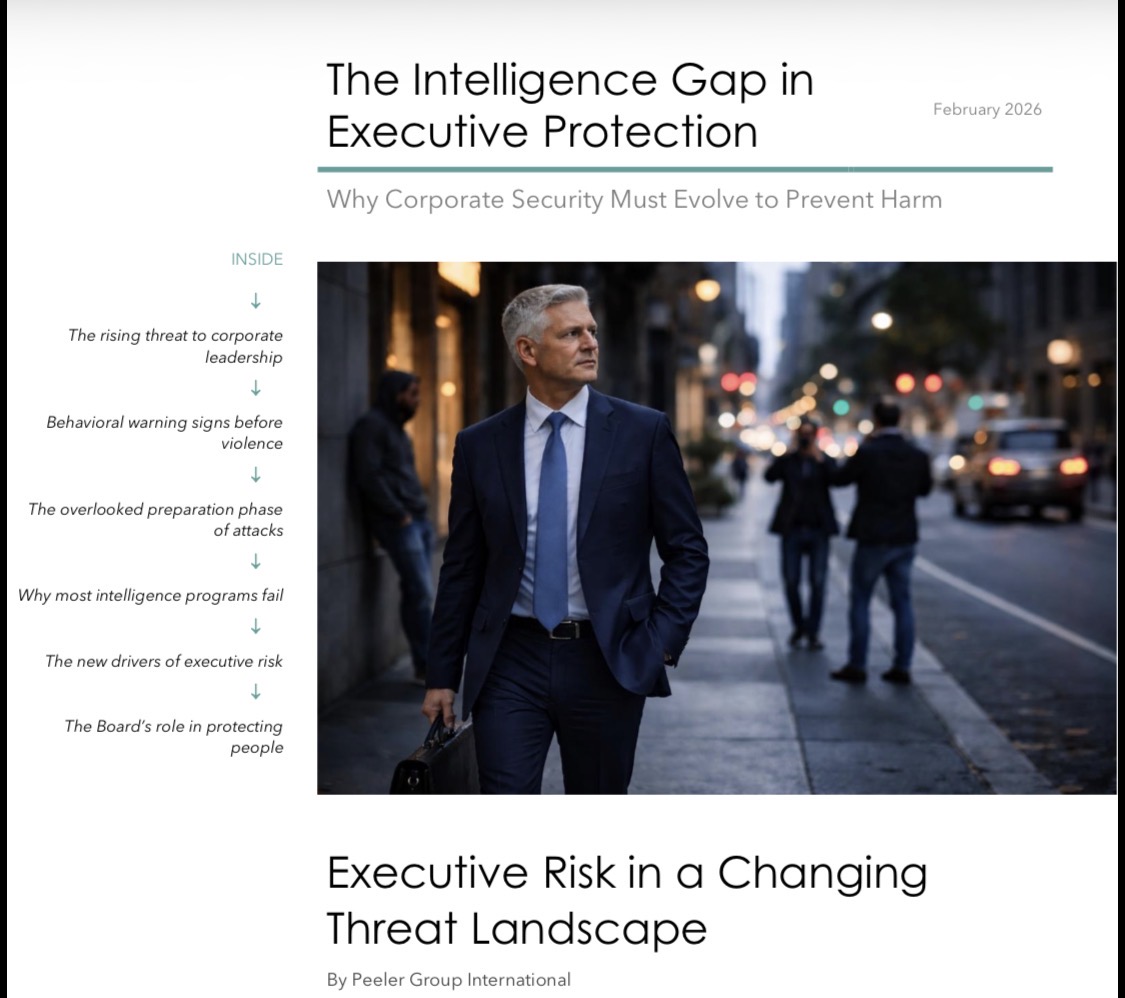
In The Intelligence Gap in Executive Protection, we examine the growing disconnect between data collection and meaningful prevention. Drawing on current threat research and real-world protective experience, this article challenges the private sector to move beyond abstract reporting and toward intelligence that changes posture, informs decision-making, and prevents harm.
Inside the article, we explore:
- Why information alone does not equal intelligence
- The role of behavioral escalation in targeted violence
- Pre-surveillance indicators that organizations routinely miss
- How intelligence must translate into operational action
- The danger of alert saturation and fragmented protection
- The critical role of executive and Board-level engagement
Executive protection is not about reacting to incidents after they occur. It is about recognizing risk early and integrating behavioral analysis, surveillance detection, governance oversight, and operational deployment into one cohesive system.
If your organization believes it is intelligence-driven, this article will help you determine whether that intelligence is truly preventive or simply informational.
Download the full article below.
Screenshot